Listing Accuracy and Photo Disclosure

Whether your listings say the same thing on every site, and whether your edited or AI listing photos are legal to publish as they are. Anchored by Brynson's 6,000-property dataset.

6 guides · Written for multifamily operators · Updated October 22, 2026

Start hereOriginal research Apartment Listing Accuracy Report: Nearly 9 in 10 Multifamily Communities Describe Themselves Differently Across Listing SitesApartment listings are inaccurate far more often than operators assume. In a Brynson analysis of 6,000 communities and 1.6 million units, nearly 89% described themselves differently depending on which listing site a renter visited. Although 97% of listings had been updated within the previous 90 days, conflicting mandatory fees, missing amenities and contradictory terms persisted.
  • Nearly 89% of the 6,000 communities analyzed, measured at origination, did not present themselves the same way on every listing site.
  • Recency is not accuracy: 97% of listings had been refreshed in the prior 90 days and the conflicts were still there.
  • The conflicts that matter most are mandatory fees, amenities and lease terms, because they change what a renter expects to pay and get.
Read the guide
Reference table12 min readVirtual Staging and AI Photo Disclosure Laws for Apartment Listings: State and City Tracker for MultifamilyAs of October 22, 2026, California requires real estate licensees advertising a sale to label digitally altered photos and link to the original, and Wisconsin's licensee rule starts January 1, 2027. Bills in New Jersey, New York and DC and a New York City proposal would reach landlords or rental listings directly, so label staging now.Read the guide Explainer9 min readDoes California AB 723 Apply to Apartment Rentals? A Guide for Multifamily OperatorsOn its text, California AB 723 (Business and Professions Code 10140.8, in effect since January 1, 2026) covers digitally altered images in advertising for the sale of real property by brokers, salespeople or people acting for them. It never mentions leases or rentals. Rental photos are still exposed: BPC 17500 and 17530 bar misleading real estate advertising by any person.Read the guide Checklist8 min readILS Listing Audit for Apartments and Multifamily: Why Listings Drift, What ILS SEO Really Controls and a Field-by-Field ChecklistFor apartment communities, ILS SEO is mostly data. Paid packages buy prominence, and listing sites do not publish how they rank. What you control is whether every field your PMS sends (rent, fees, availability, lease terms, pets, amenities, floor plans, photos) is complete and identical on every site. Audit field by field, fix in the PMS, verify next sync.Read the guide Checklist9 min readVirtual Staging and Listing Photo Policy Template for Apartment and Multifamily CommunitiesA virtual staging policy for an apartment community sorts every edit into three tiers: allowed without a label (lighting, color, cropping), allowed with a label and the original nearby (staging, added or removed furniture), and prohibited (features the unit lacks). It also covers model units, renderings, originals, refresh dates and who signs off.Read the guide Comparison9 min readHow to Tell If Apartment Listing Photos Are AI Generated or Virtually Staged: Tools Compared for Multifamily TeamsThere are two ways to check an apartment listing photo. AI detectors such as Hive and Sightengine return a probability that an image is synthetic. Comparison tools register the published photo against your original and show what changed. Disclosure rules ask what changed, so multifamily teams need the original on file, not only a score.Read the guide
Put it into practice

Compliance360 Listing Consistency

Whether your listings say the same thing on every site, and whether your edited or AI listing photos are legal to publish as they are. Anchored by Brynson's 6,000-property dataset.

Explore Compliance360 Listing Consistency
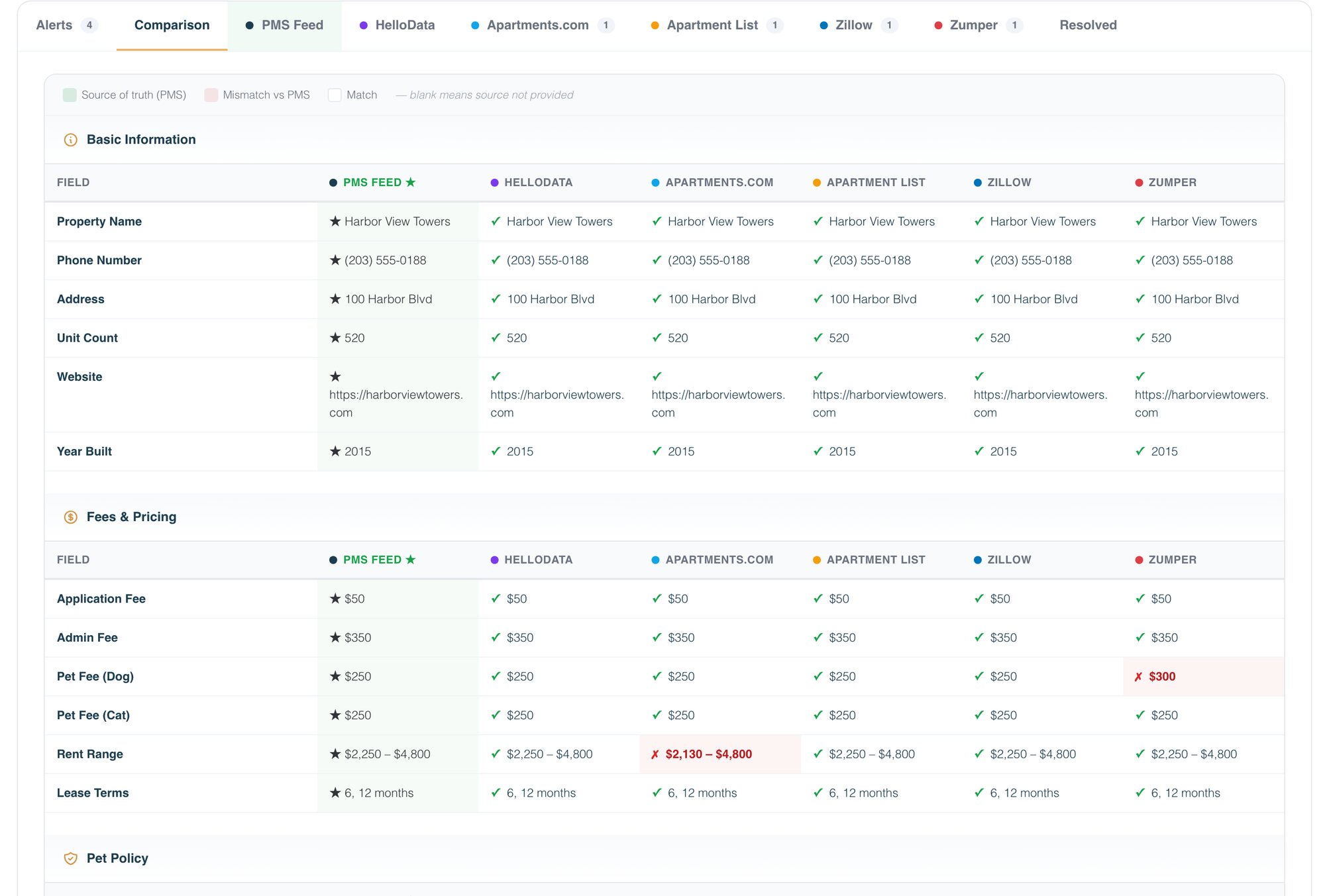
Compliance360 Listing Consistency grid comparing rent, fees and amenities across ILS listings and the PMS