
Most AI guesses fluently. Ours starts from what your words mean, reads what you’ve given it, says how every number was measured, and tells you when not to trust it.
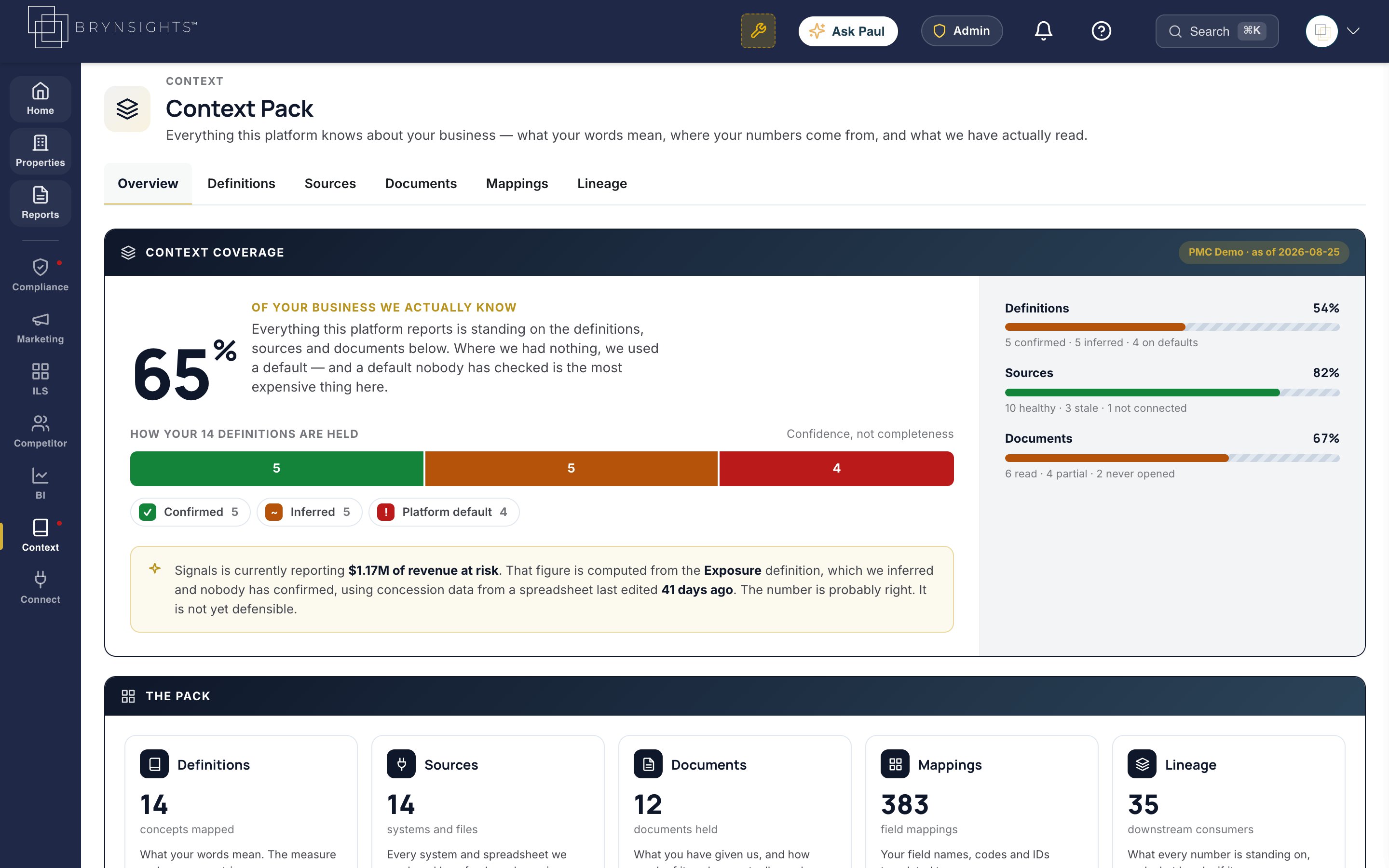
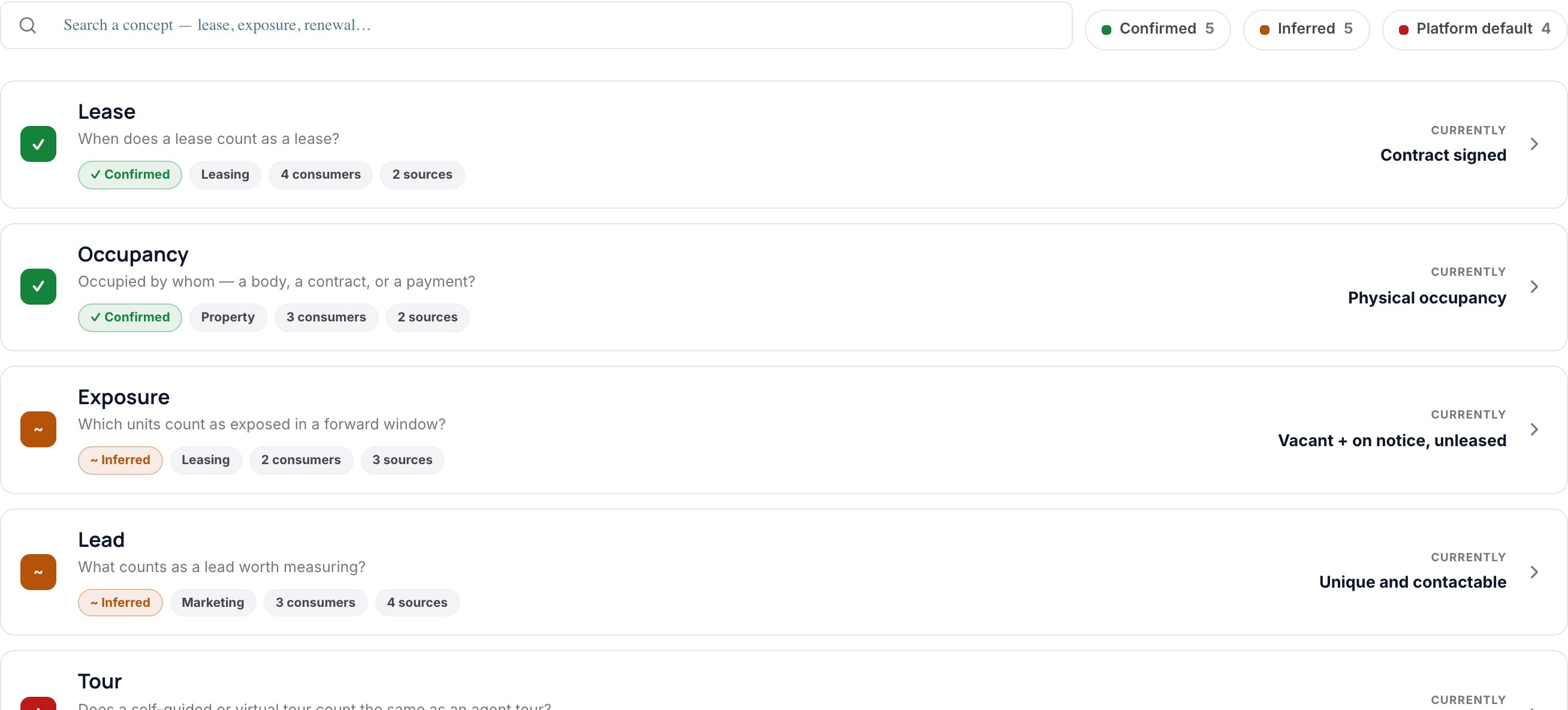
An answer is only as good as what “lease”, “occupancy” or “exposure” means to you. We define that first, with you.
Every claim carries its class (measured, inferred or decided) and the source it stands on. No confident guesses.
AI finds, ranks and drafts. People approve, change and sign off, and that decision is recorded with the evidence.
The assistant is never an all-access key. It sees what the person asking can see, and nothing more.
Intelligence without context is noise. Paul without intelligence is a chatbot. None of it matters until a person acts on it.
What your words mean, where your numbers come from, and what we’ve actually read. All confirmed with you, not assumed.
Signals against your benchmarks, jurisdiction-aware rules, and scene intelligence over every listing photo.
Ask in plain English. Paul answers with the evidence, builds the report, and starts the work.
Decide, approve and verify, inside the permissions they already have, with every step on the record.
Does a lease count at contract signed, or move-in? Is a month-to-month rollover a renewal? Is a concession weeks free or dollars off? The Context Pack holds your answers and marks each one confirmed, inferred, or still on a platform default.
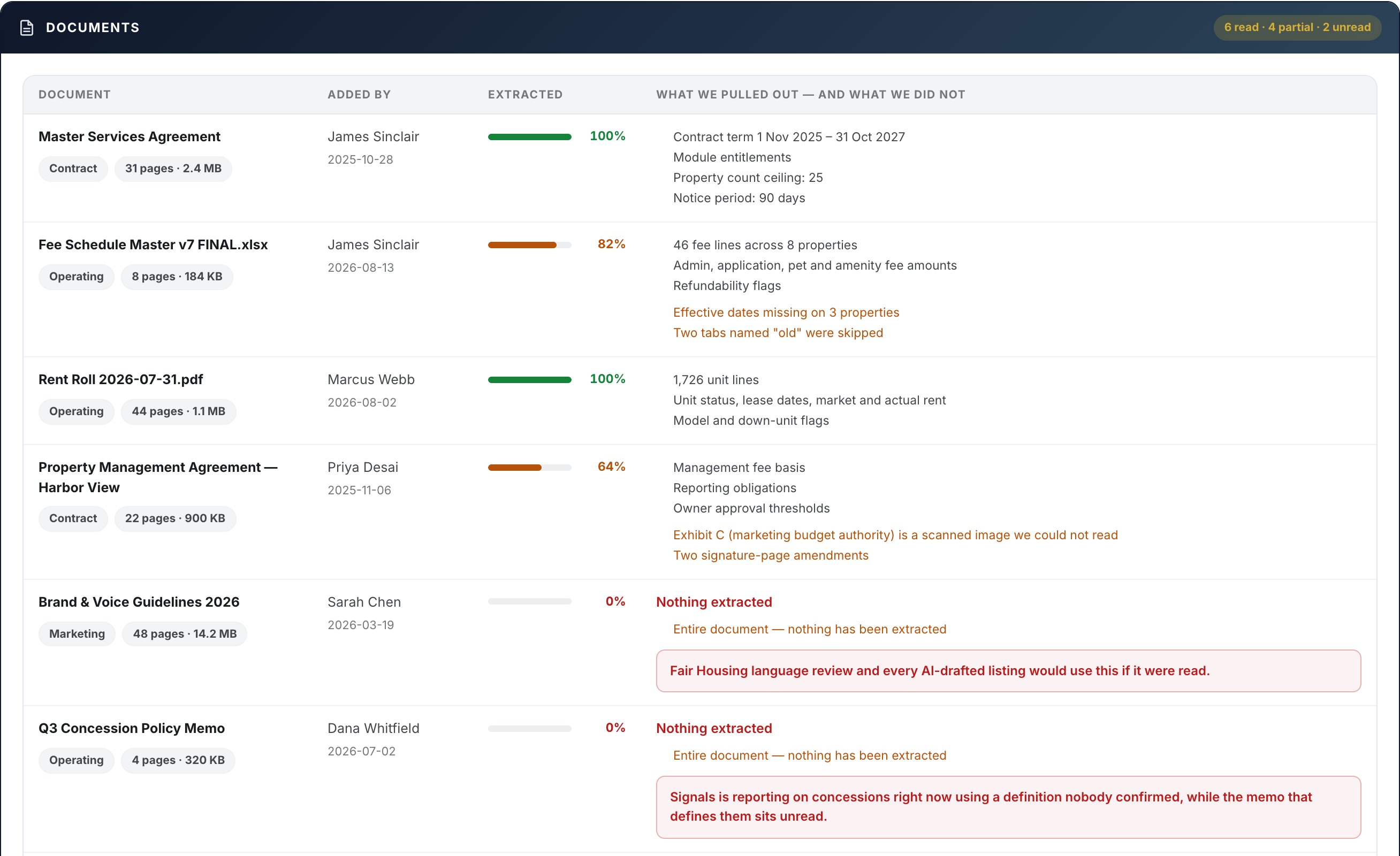
Give us your fee schedule, rent roll, management agreements and brand guidelines. We show exactly what was extracted, what wasn’t, and which answers are weaker because of it. “Signals is reporting on concessions using a definition nobody confirmed, while the memo that defines them sits unread.”
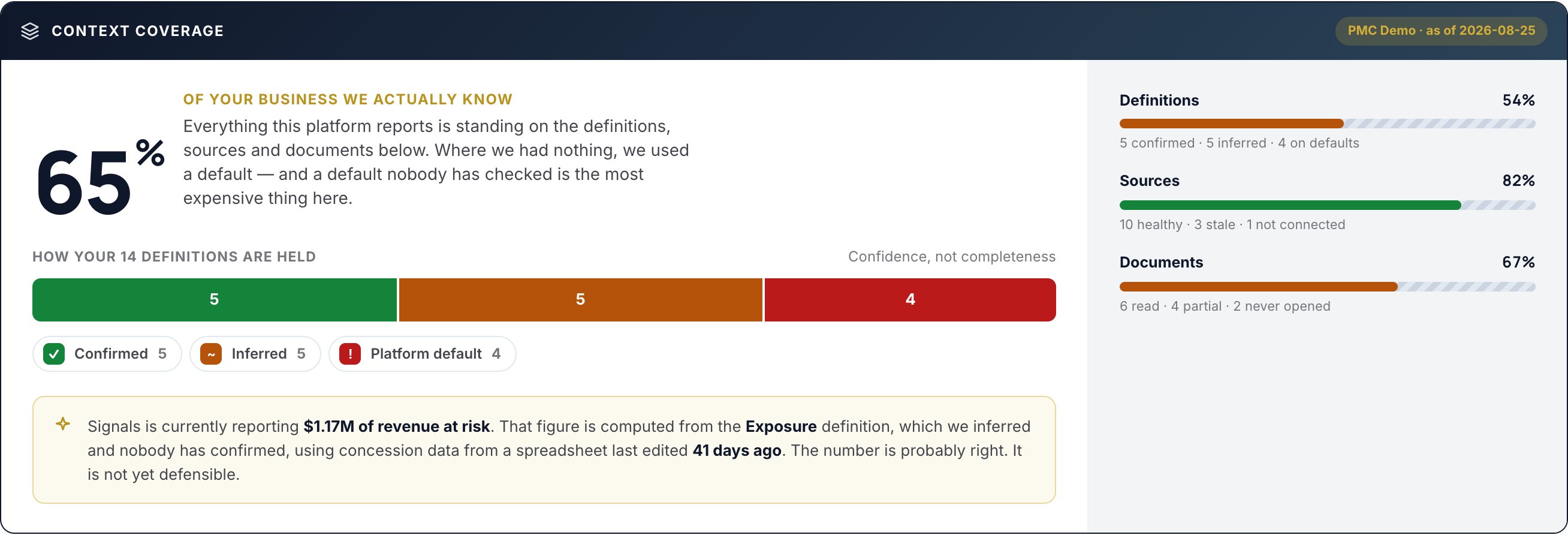
“The number is probably right. It is not yet defensible.”The product, about its own $1.17M figure
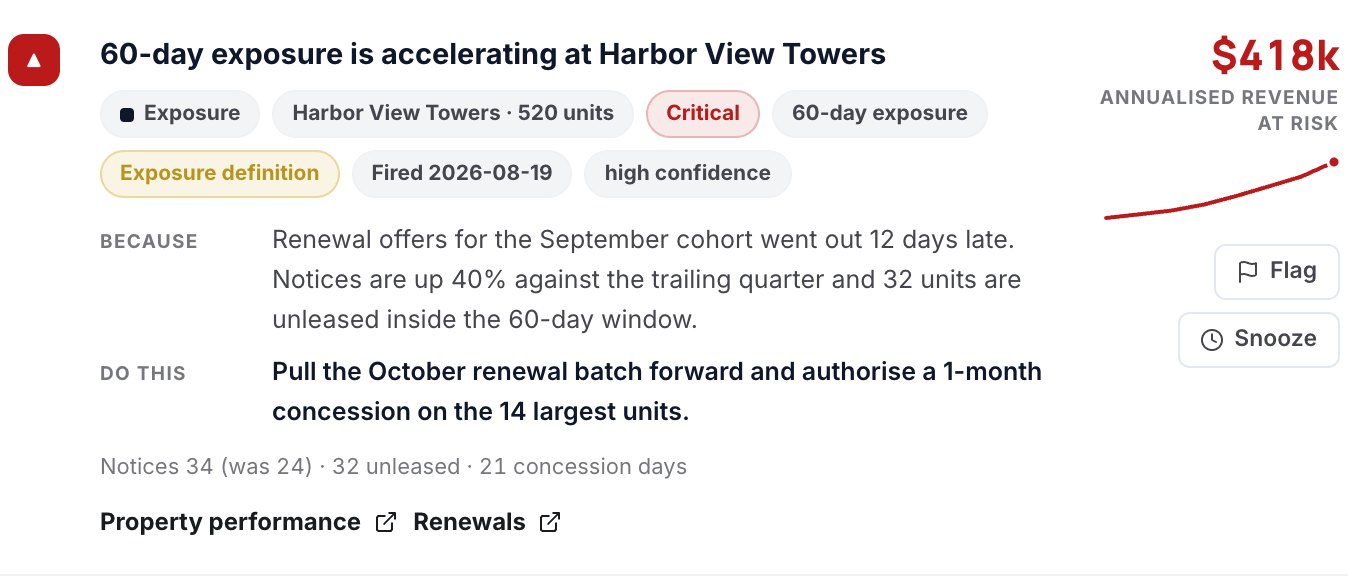
Every signal names what changed, why it changed, what it’s worth, and the specific action, measured by the definition in your Context Pack, with a confidence level attached.
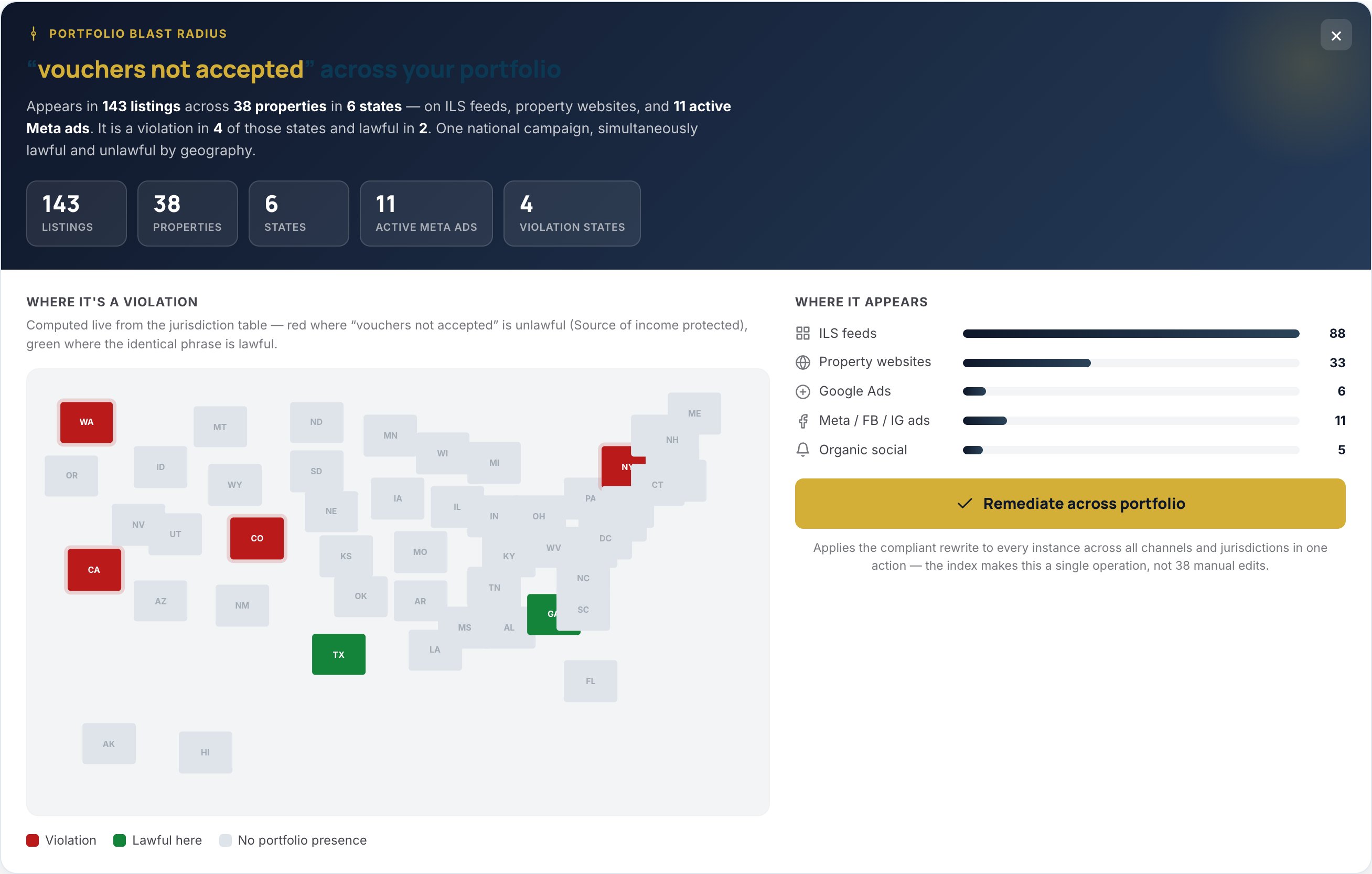
Every rule in force per property (city, state, federal) resolved before anything is flagged.
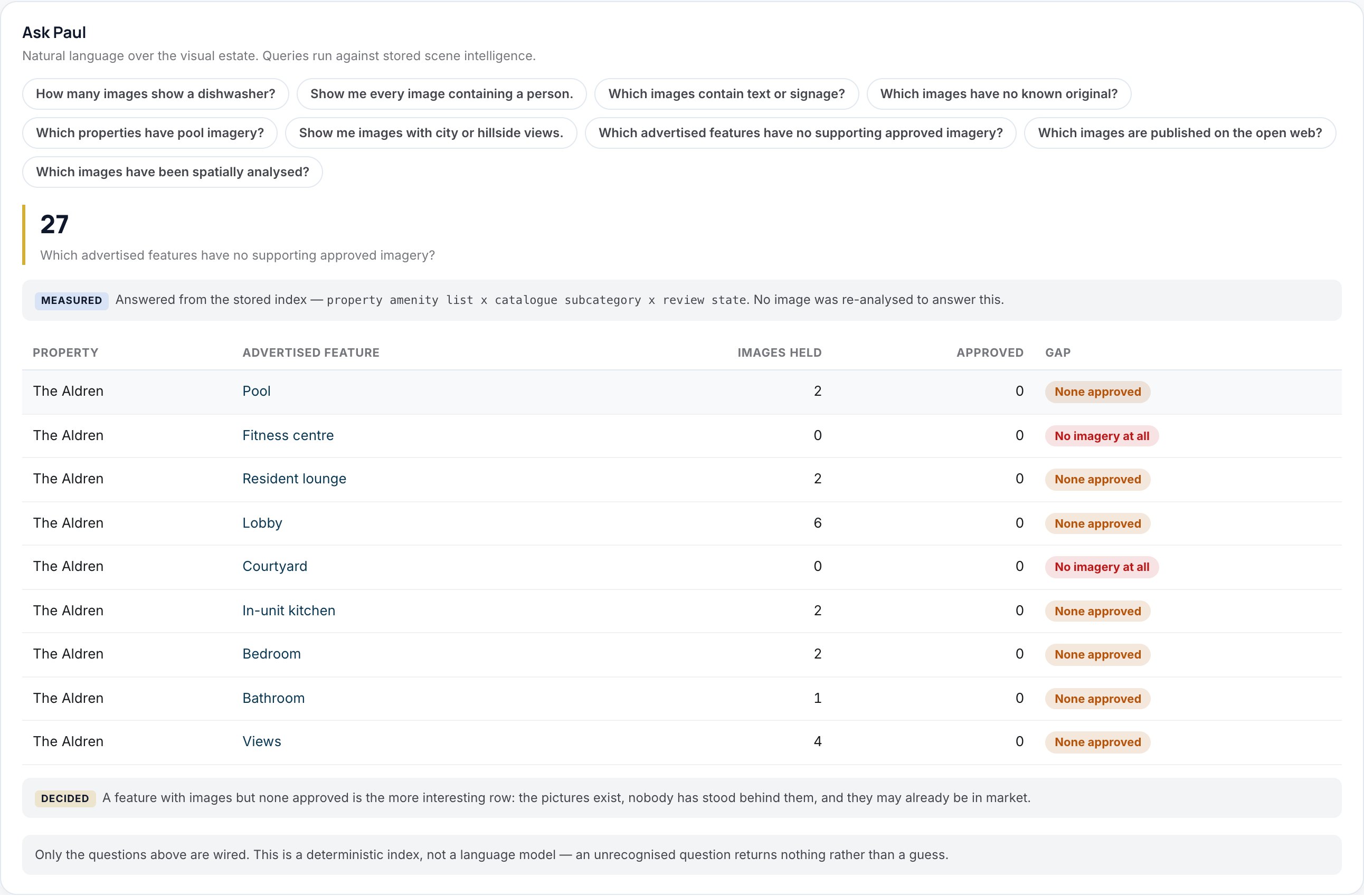
What’s in each listing image (signage, people, amenities), so questions are answered from the index, not a guess.
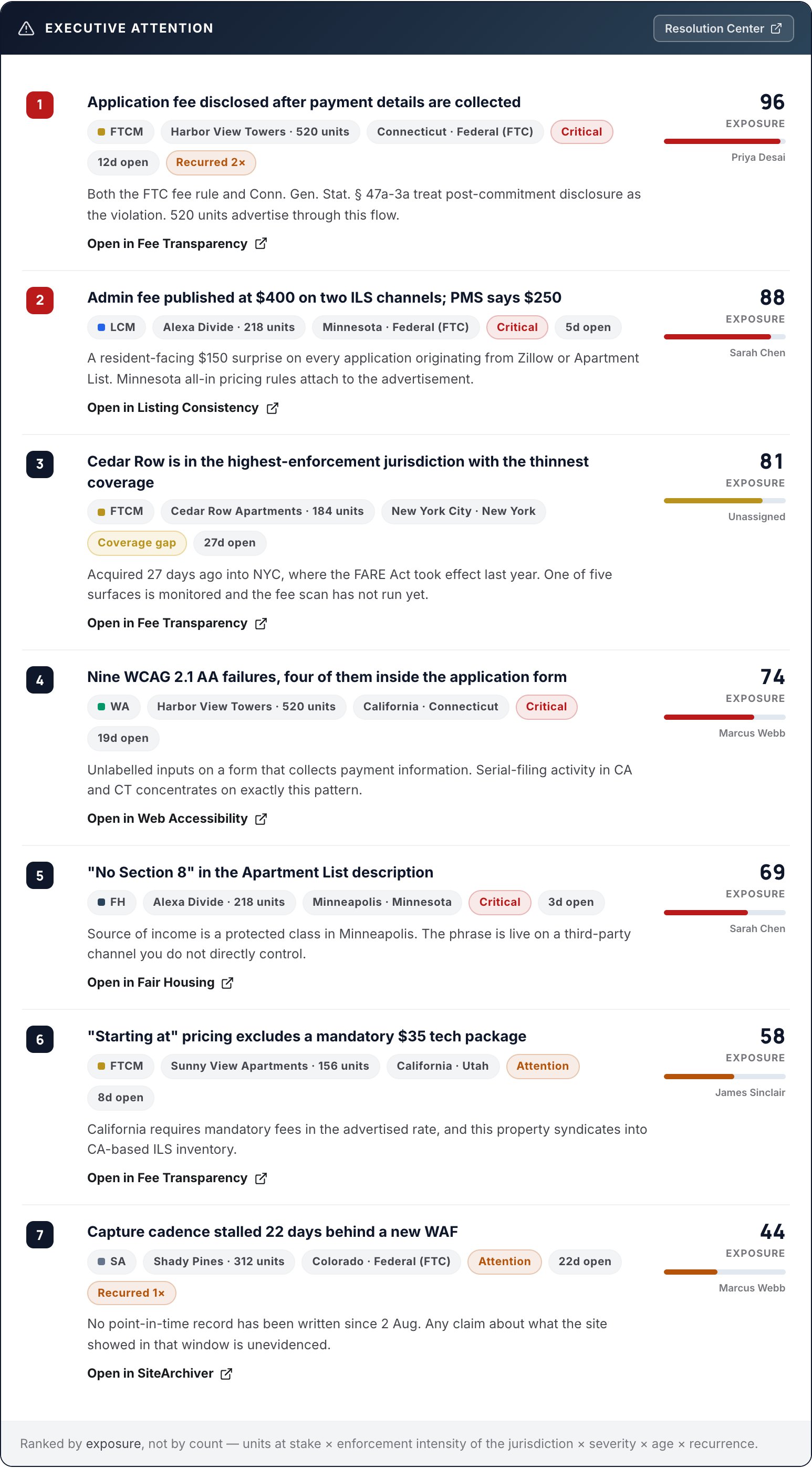
Units at stake × enforcement intensity × severity × age. The formula is shown, not hidden.
Ask “which advertised features have no approved imagery?” and Paul answers 27, then shows the query it ran and says no image was re-analyzed to get there. Ask something it can’t answer, and you get nothing rather than a guess.
“Monthly owner report for flagship properties with attribution and compliance, plus an AI recap.” Paul picks the sections, writes the takeaways, and shows a live preview. Or hand him the report you already send: he rebuilds it on live data and flags the one section he can’t source.
See Reporting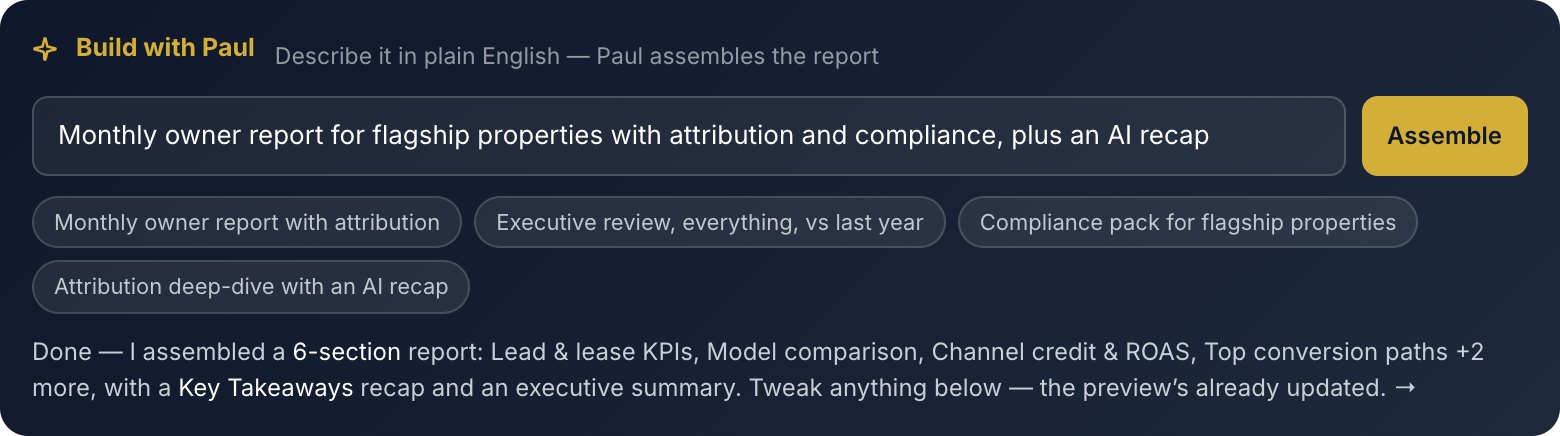
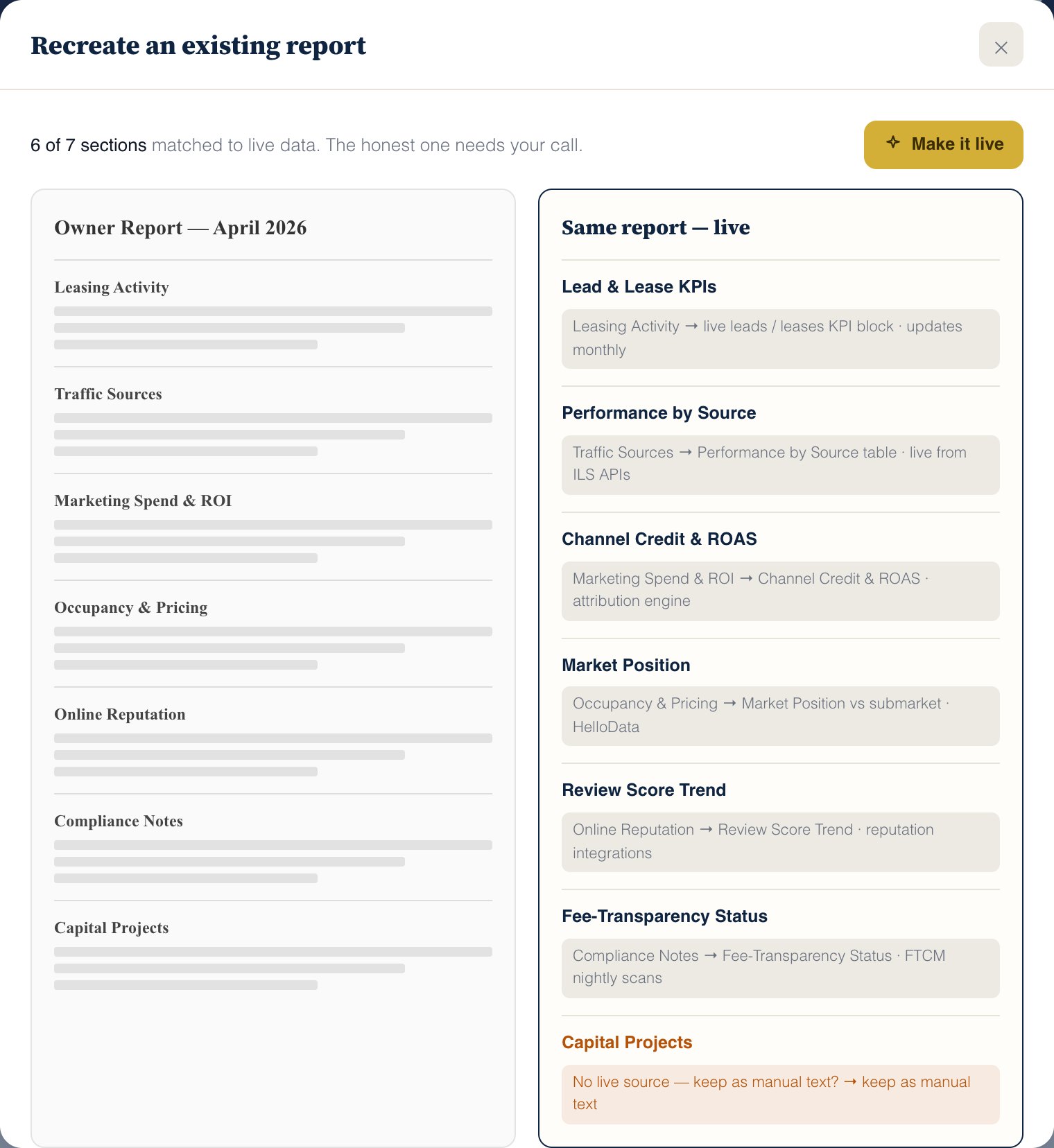
One data model, one audit trail, one analyst. A finding doesn’t leave the platform until it’s fixed and reported. Every step below is a real screen.
“Which advertised features have no approved imagery?” 27, and exactly how that number was measured.
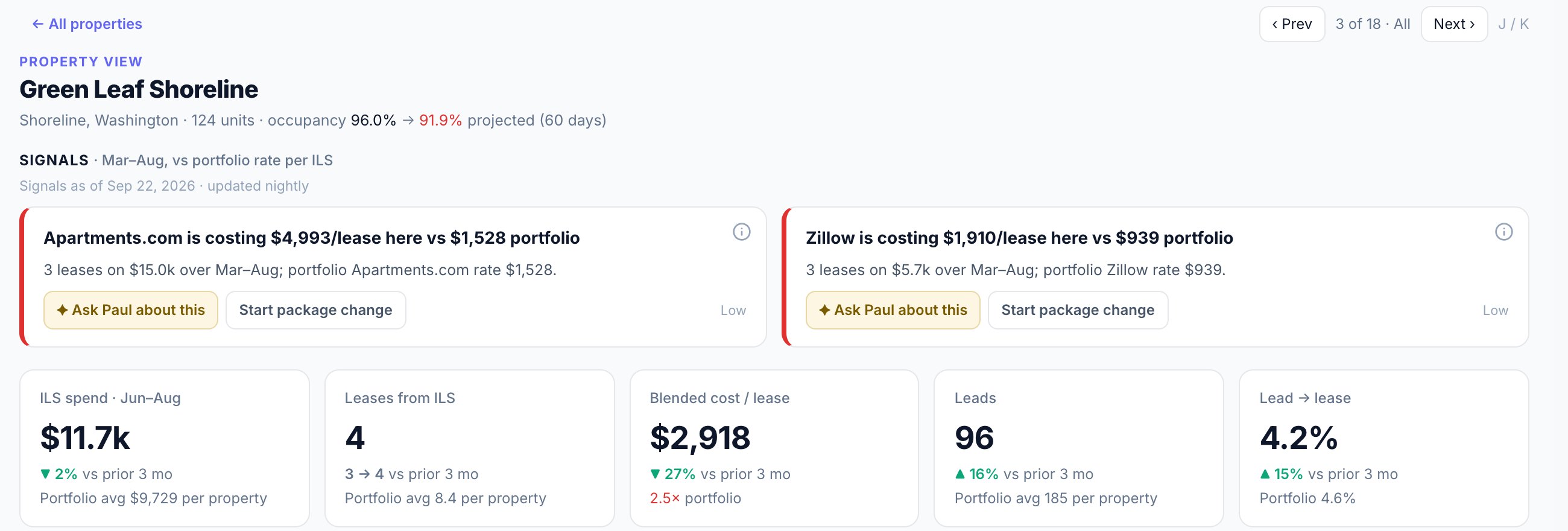
Apartments.com costing 3× the portfolio rate at one property? Start the package change right there.
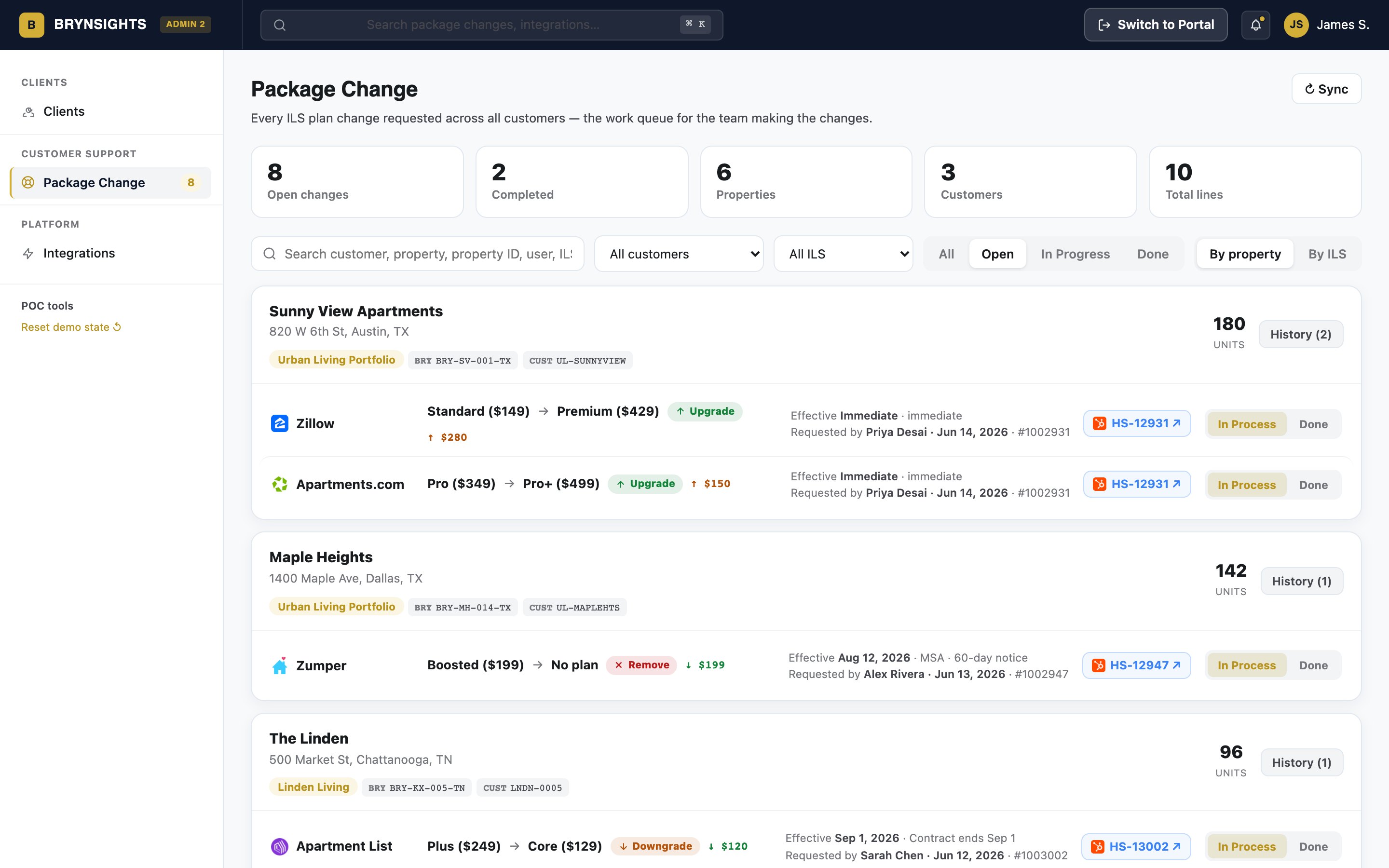
Requests land in our work queue with a ticket, an effective date and a status you can see.
Paul assembles the owner report (KPIs, attribution, compliance and an AI recap), scheduled to send.
When a signal says Apartments.com is costing 3× the portfolio rate at one property, “Ask Paul about this” and “Start package change” sit on the same card. The request lands in the Brynson team’s queue with a ticket, an effective date and a status you can follow.
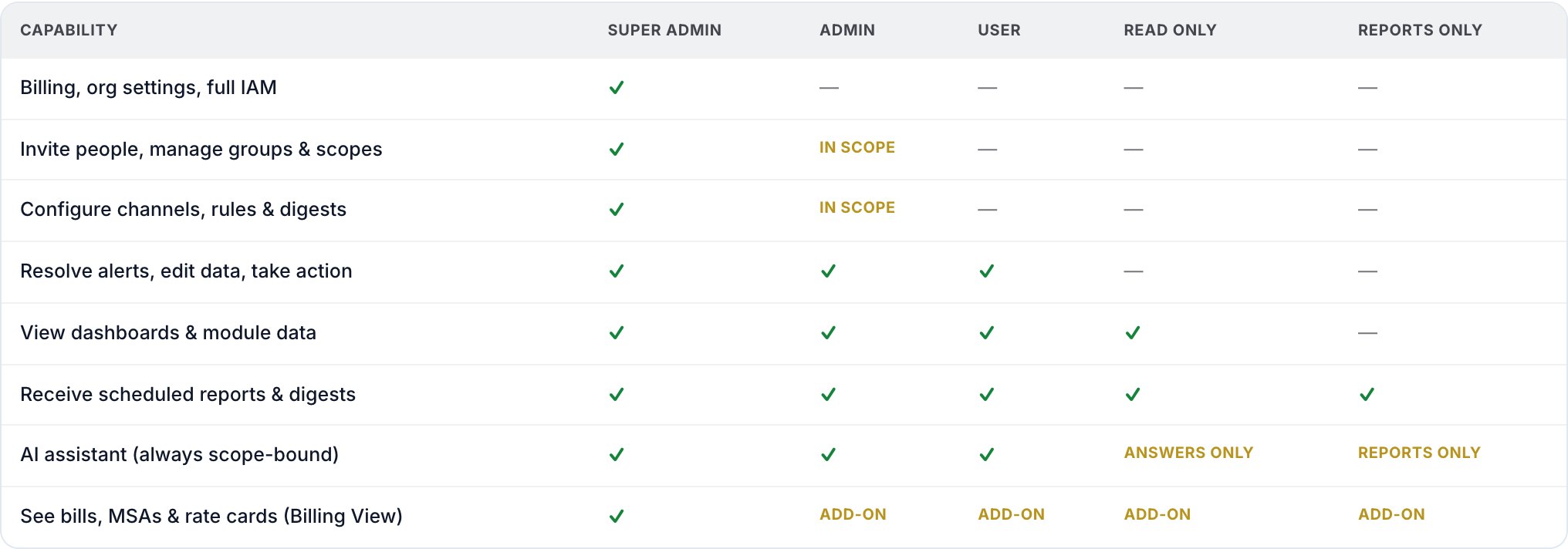
Access is role × modules × properties. The assistant inherits exactly that. A regional manager’s Paul only knows their region, and a read-only user gets answers but no actions.

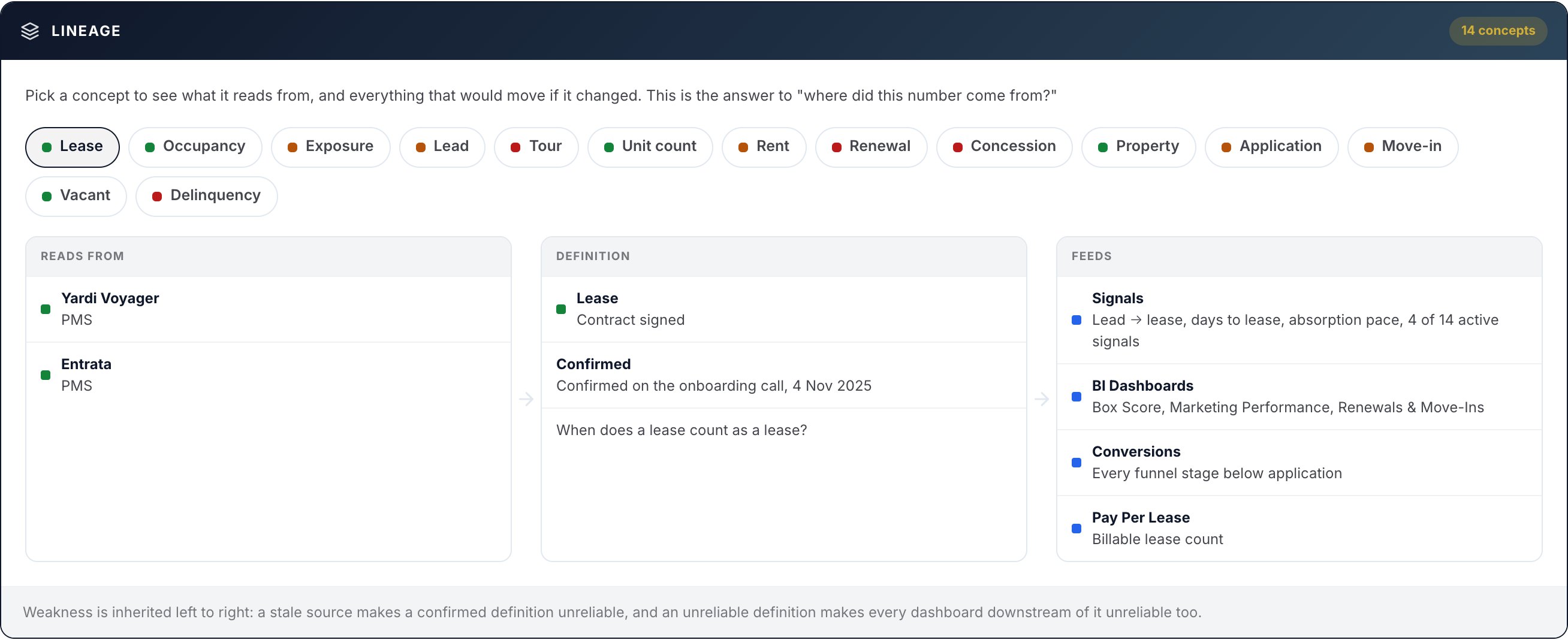
Everything the platform knows about your business: your definitions (what counts as a lease, occupancy, exposure…), the systems we read from, the documents you’ve given us and what we extracted from them, how your field names map to ours, and the lineage from every source to every number. It’s built with you during onboarding and stays editable.
He says so. Answers are drawn from your data and labeled with how they were measured. A question the index can’t answer returns nothing rather than a plausible-sounding guess.
Paul prepares work (a package change, a report, a schedule) and a person submits it. Changes to ILS packages are carried out by the Brynson team and verified on the next scan.
Exactly what the person asking can see. The assistant is bound to the user’s role, modules and property scope; read-only users get answers only, and reports-only users get reports only.
In a demo, we’ll build your Context Pack and ask the same questions of your portfolio.